
Orbit Boy has officially announced the successful execution of critical airdrop tests for the engineering model of the Orbit Boy Launch Vehicle. This milestone marks a significant leap forward in the company's mission to provide flexible, air-launched satellite delivery solutions.
The test, conducted at an altitude of 5,000 meters, utilized the robust Antonov-70 (An-70) transport aircraft as the primary deployment platform.
Key Test Highlights
- Platform Performance: The proprietary airdrop platform functioned seamlessly, ensuring a stable and controlled release of the engineering model.
- Trajectory Accuracy: Deployment trajectories were tracked in real-time, confirming that the vehicle follows the precise flight paths required for successful orbital insertion.
- Payload Capacity: The engineering model validated the structural integrity and design for a vehicle with a potential payload capacity of 400 kg.
- Data Validation: On-board telemetry and sensor arrays recorded all critical parameters, with results aligning perfectly with the original technical design documentation.
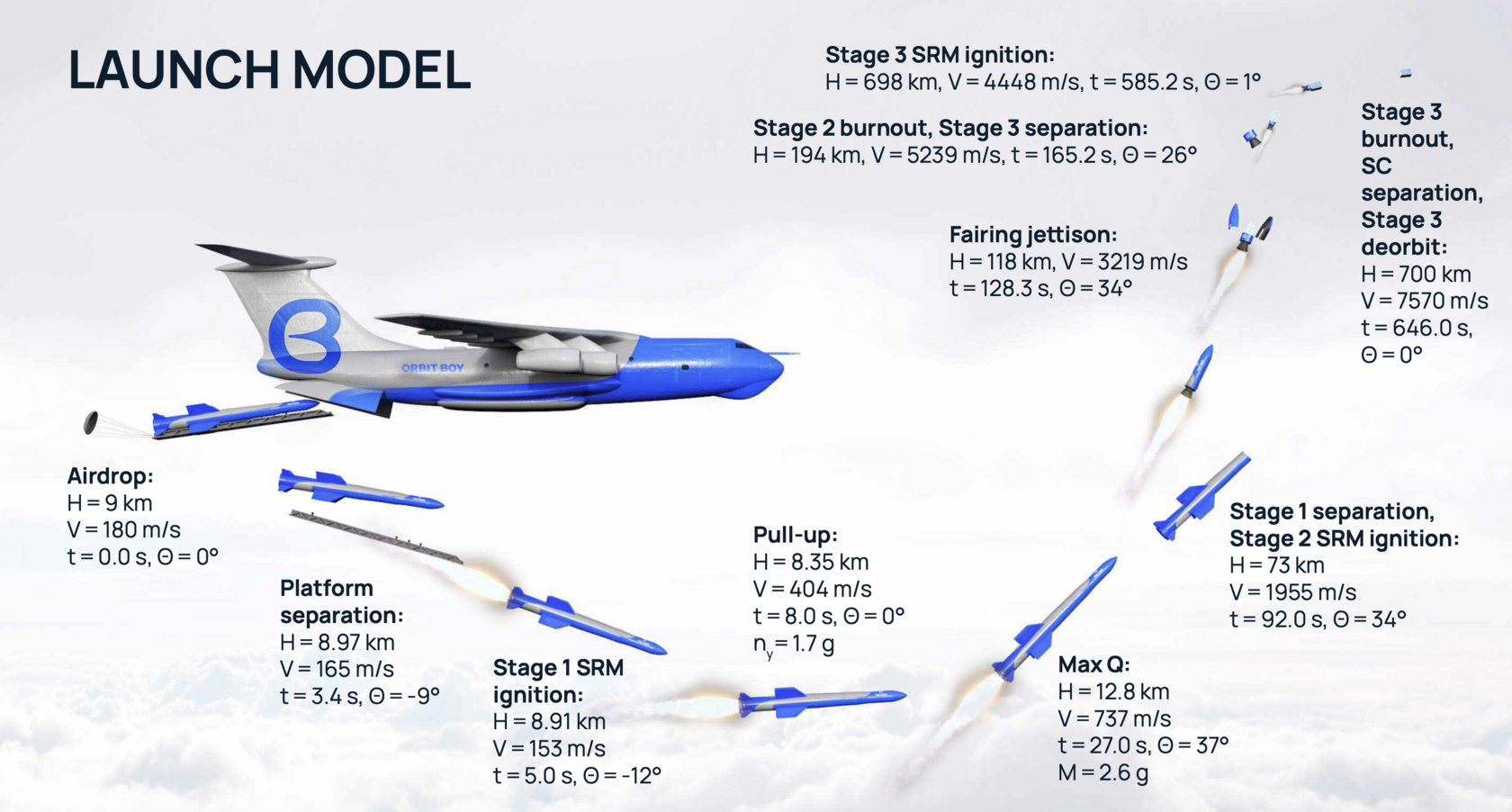
A New Era for Air-Launch Technology
By leveraging the "drop-and-ignite" method from a mid-lift aircraft like the An-70, Orbit Boy aims to bypass the limitations of traditional ground-based launch pads. This successful test proves that the engineering model can withstand the complex aerodynamic forces involved in high-altitude deployment.
"The data gathered from this 5,000m drop confirms that our platform is not just a concept, but a flight-ready reality," stated the engineering team. "Every measured parameter—from pitch stability to release timing—matched our simulations with high precision."
What’s Next?
With the engineering model's performance confirmed, Orbit Boy will now move toward the next phase of integration, focusing on suborbital launch of the rocket to be executed January 2026.